
As mentioned in previous articles on this website, Hitler had a tendency for grand, grander, and grandest projects. One such endeavor was the construction of the Atlantic Wall, a massive defensive system initiated by Hitler in 1942. Stretching from Norway to the Spanish border, the Atlantic Wall spanned 5.000 kilometers along the coastlines of the North Sea, the English Channel, and the Atlantic Ocean. The plan called for 15.000 bunkers and obstacles to defend the coastline, incorporating natural barriers such as cliffs and rocks where possible. The project required 11 million tons of concrete (600.000 cubic meters per month) and 1 million tons of steel for reinforcement.
Financing the Atlantic Wall
How was the construction of this immense defensive line funded? Primarily at the expense of the occupied territories, meaning the occupied populations effectively paid for their own oppression. Secondly, the Germans requisitioned local labor, construction companies, and materials on a massive scale. Both local workers and forced laborers were deployed for the construction, with an estimated 450.000 workers involved. The executing construction company was under the control of Organisation Todt.
Organisation Todt
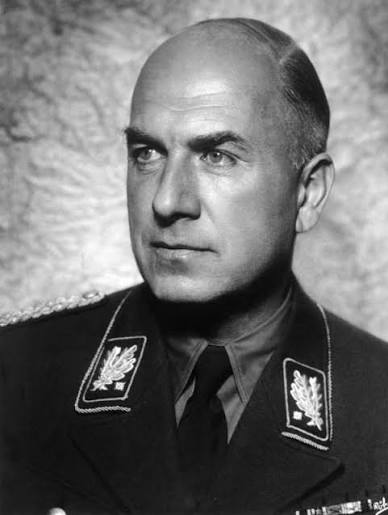
Organisation Todt was a vast, semi-military state organization responsible for the construction of major military projects, including the Atlantic Wall, the West Wall (Siegfried Line), bunkers, roads (Autobahnen), and airfields. The organization did not carry out the construction itself but focused on design and coordination. It relied heavily on forced laborers, prisoners of war, and later, concentration camp prisoners. The total number of workers involved in most of its projects is estimated at 1.4 million, the majority of whom were prisoners.
The overall responsibility for Organisation Todt lay with Fritz Todt from its founding in 1933. Todt joined the NSDAP and the SA (Sturmabteilung) in 1922. His career took off after Hitler came to power. Following Todt’s death in a plane crash in 1942, Albert Speer took over.
Hitler’s goal was to make the Atlantic Wall an almost impregnable fortress that could be defended with relatively few troops, freeing up soldiers for the Eastern Front. On August 25 1942 Field Marshal Gerd von Rundstedt issued Order No. 14 to begin construction.
By May 1, 1943, the project was significantly behind schedule due to shortages of labor, building materials, and fuel. Only about a quarter of the planned structures had been completed.
Erwin Rommel
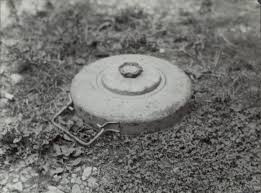
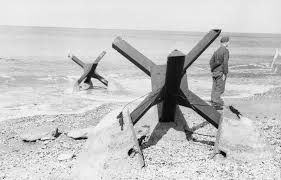
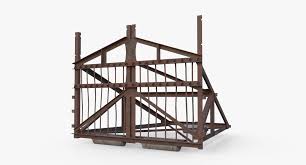
To address the delays, Erwin Rommel was appointed Inspector of Coastal Defenses. Rommel believed that the decisive battle against a seaborne invasion would take place on the beaches. In addition to bunkers (Widerstandsnesten, or WN) and forts, he ordered the placement of various obstacles in the tidal zone, such as Tellermines, barbed wire, anti-tank walls,Tetrahedrons, Czech hedgehogs, Hemmbalken, and Belgian gates. He also planned to lay 50 million mines to turn the beaches into vast minefields. However, due to Allied airstrikes and a shortage of mines, only about 6 million mines were actually laid.
Behind the coastline, Rommel planned an extensive network of poles (known as “Rommel’s Asparagus”), connected with barbed wire and equipped with mines to defend against airborne landings.
By June, significant gaps remained in the defenses. New Allied inventions were observed and studied by Allied specialists who secretly visited the beaches at night. The construction of a second defensive line further inland was abandoned.
To compensate for the labor shortage, Rommel attempted to use Luftwaffe personnel. However, the Luftwaffe was Hermann Göring’s domain, and he refused to release his troops for construction work.
Thus, by D-Day, there were still major gaps in the defensive line. Was this Rommel’s fault? Certainly not. The defenses were strengthened wherever possible, and troop deployment had been significantly improved. For Rommel, the primary culprits were the shortages of materials and labor.
The West Wall (Siegfried Line)
The Atlantic Wall was not the only defensive line built by the Germans. The West Wall, also known as the Siegfried Line, was one of the largest military constructionprojects of the Third Reich, built between 1936 and 1940. It consisted of thousands of bunkers, tank obstacles, underground tunnels, gun emplacements and logistical infrastructure, stretching along Germany’s entire western border from Kleve, near the Dutch border, to Basel, near the Swiss border, covering approximately 630 km.
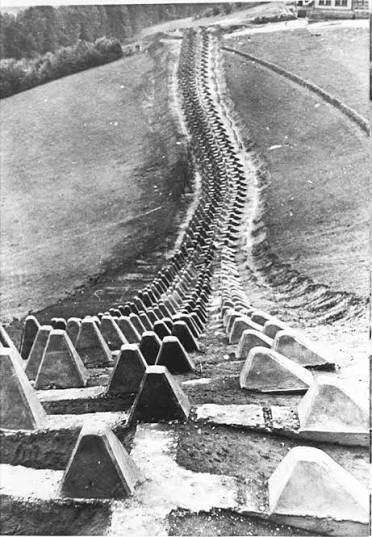
The line included between 17.000 and 18.000 bunkers and fortifications, thousands of kilometers of trenches, extensive anti-tank obstacles, observation posts, artillery and machinegun bunkers, and anti-aircraft guns. The construction was overseen by Organisation Todt, with up to 500.000 workers, thousands of engineers, and hundreds of construction firms from the German cement and steel industries involved at its peak.
The estimated materials used included 7 million cubic meters of concrete and 1.2 million tons of steel (though figures vary). The steel was used for reinforcing concrete, armor plating, gun turrets, embrasures, doors, railway infrastructure, and anti-tank obstacles. One of the most iconic features were the “dragon’s teeth”, hundreds of kilometers of pyramid-shaped anti-tank obstacles, arranged in rows 3 to 6 deep.
The total cost was approximately 3.5 billion Reichsmarks, equivalent to tens of billions of euros today. The West Wall was likely the largest fortification project before the construction of the Atlantic Wall.
The Maginot Line
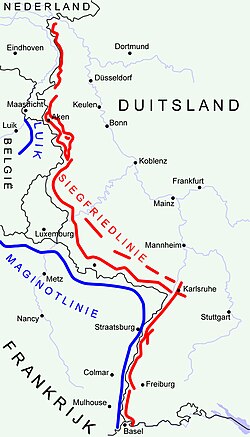
France began constructing a technically and architecturally superior defense system in 1929. Work continued until 1940, with the main section running from the Swiss border to the Belgian border, effectively parallel to the Siegfried Line. The heavily fortified system had a total length of about 450 km, later extended to approximately 700 km.
The Maginot Line was not a continuous wall but a defensive zone up to 20 km deep, comprising forts, bunkers, artillery positions, anti-tank obstacles, observation posts, and underground connections. The design and supervision were handled by the French Corps of Engineers. The Commission d’Organisation des Régions Fortifiées (CORF) determined the design, location, and execution from 1927 onward, while the Section Technique du Génie (STG) established technical standards and construction drawings. Actual construction was carried out by private contractors and specialized firms under military supervision.
The estimated materials used included 2 million cubic meters of concrete and 150,000 tons of steel for turrets, armor, and weapon systems. Rotating gun turrets could fully retract into the concrete when not in use.
The line consisted of 37 large forts, mostly underground, each manned by 500 to 1.000 soldiers and equipped with its own power plant, infirmaries, kitchens, and storage facilities. Many of these forts also featured electric railways, underground tunnels, ammunition trains, water reservoirs, diesel generators, and air filtration systems against chemical weapons. A soldier could travel kilometers without surfacing.
In addition, the line included dozens of small forts, hundreds of infantry bunkers, observation posts, casemates, and thousands of supporting structures. The construction cost approximately 5 billion French francs (tens of billions of euros today) and was one of the most expensive projects of its time.
Most forts remained operational and were not captured when Germany invaded Belgium. German armored divisions advanced through the Ardennes, bypassing both the French armies and the forts. The Maginot Line was not defeated, it was outflanked.
Comparison: Maginot Line vs. Siegfried Line
- Maginot Line: 450 km main sector, built 1929–1940, featuring many large forts with heavy concrete and numerous steel gun turrets. Cost per kilometer was extremely high.
- Siegfried Line: 630 km long, built 1936–1940, with few large forts, lighter concrete construction, and few steel gun turrets. Cost per kilometer was significantly lower.
Other Defensive Lines
The Pommernstellung (Pommern Wall)
The Pommernstellung was a German defensive line in the Pommern region, constructed between 1932 and 1945. It stretched through the Pomeranian lake district, from Landsberg an der Warthe (Gorzów Wielkopolski) in the south to Baldenburg (Biały Bór) and Pollnow (Polanów) in the north.
Initially built in the 1930s as a light defense against a potential Polish attack, the line consisted of key defensive points and strong fortifications near Neustettin (Szczecinek) and Deutsche-Krone (Wałcz). After the failure of Operation Barbarossa, the line was reinforced to slow the advance of the Red Army.
The Ostwall (Panther-Wotan Line)
The Ostwall, or Panther-Wotan Line, was a German defensive line on the Eastern Front, serving as a fallback position against the advancing Red Army. The Panther Line ran from the Baltic Sea via Narva to the western shore of Lake Peipus, then through Vitebsk and Pskov to the Dnieper River. The Wotan Line extended from Dnipro to the Sea of Azov.
Hitler, who refused to acknowledge the possibility of defeat, initially opposed the Ostwall’s construction, as it symbolized weakness. Nevertheless, construction began in September1943. Over 50.000 civilian workers built 6.000 fortifications, including 800 concretebunkers, dug 30 km of anti-tank ditches, and installed 180 km of barbed wire.
To prevent local populations from being conscripted by the Red Army, the Germans deported over 900.,000 people from the area. Approximately 250.000 men were deported to Lithuania and Latvia.
By the end of September 1943, the Red Army broke through the Wotan Line, which was still under construction. The Soviet Operation Bagration in June 1944 marked the definitive collapse of the Ostwall.
Standardized Construction Methods
Atlantic Wall
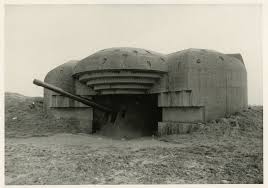
For the Atlantic Wall, the Germans developed a system of standardized structures known as Regelbauten (standard designs), categorized into the 500, 600, and 700 series. The 600 series (types 601–699) included bunkers with specific purposes and layouts. Early construction also used 500 series designs, originally developed for the West Wall. In 1944, the 700 series (701–704) was introduced, featuring specialized combat bunkers.
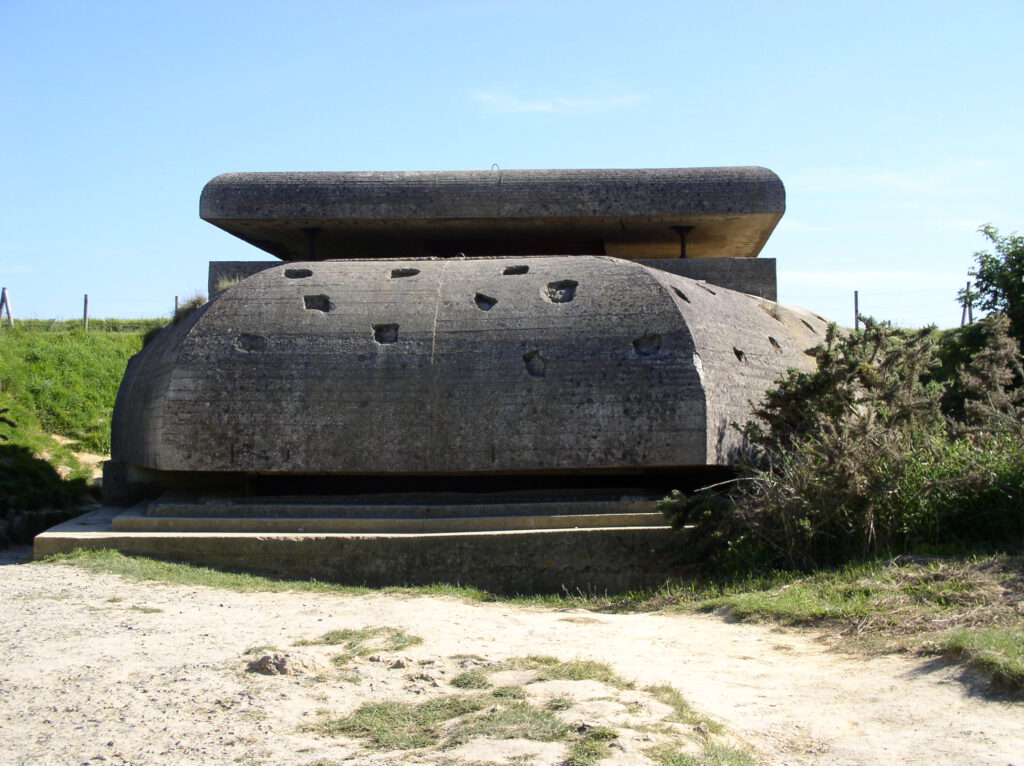
Dimensions, wall thicknesses, ventilation, ammunition storage, and layouts were strictly defined in construction regulations, overseen by Organisation Todt. This standardization allowed thousands of bunkers to be built rapidly in a relatively short time.
In addition to standardized bunkers, strategic locations were designated as Festungen (fortresses), heavily reinforced positions intended to block Allied advances and protect key harbors, such as:
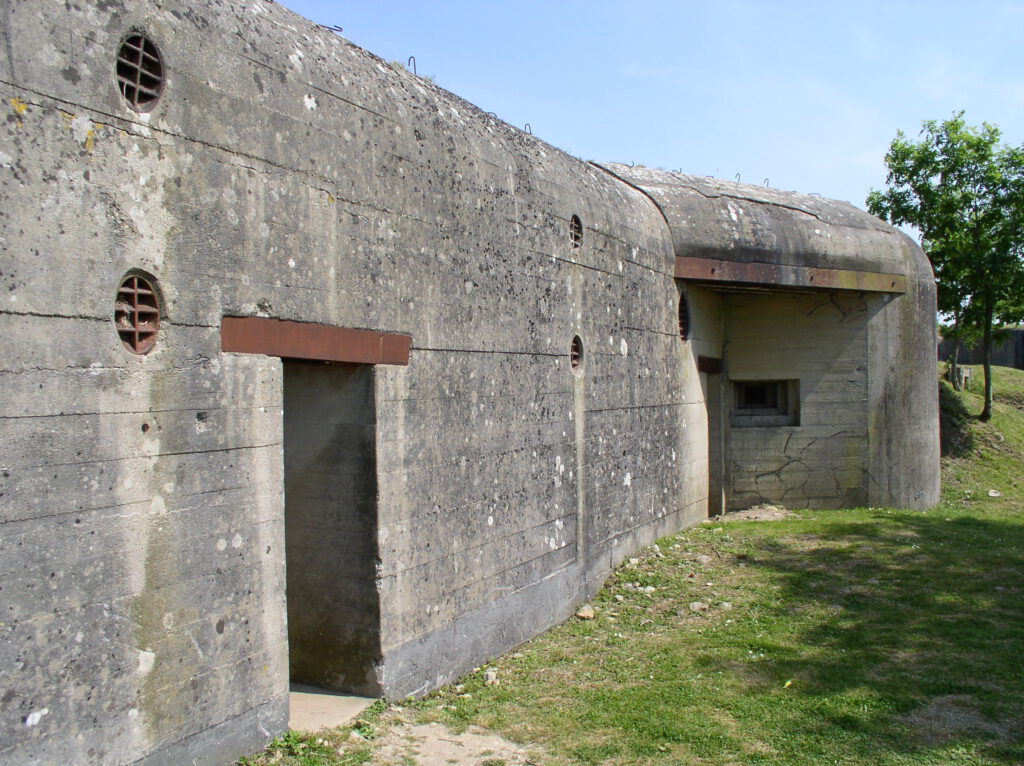
- Festung Brest – Naval harbor and U-boat base
- Festung Lorient & Saint-Nazaire – Famous for their massive U-boat bunkers
- Festung Calais & Dunkirk – Critical due to the narrow English Channel passage
- Festung Gironde – Guarded the port city of Bordeaux
- Festung La Rochelle/La Pallice – A major U-boat base on the Atlantic coast. The fortress was not attacked but besieged by the Allies. The German garrison held out until the end of the war on May 8, 1945.
- Festung Saint-Malo & Cézembre Island – A key link in German coastal defense and a refuge for smaller naval units.
- Festung Hook of Holland – Protected the Nieuwe Waterweg and the port of Rotterdam
- Festung IJmuiden – Protected the locks and the Kriegsmarine bunkers built there
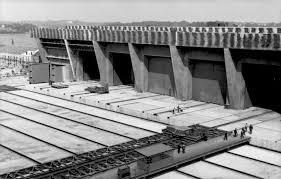
The Attack on Festung Saint-Malo
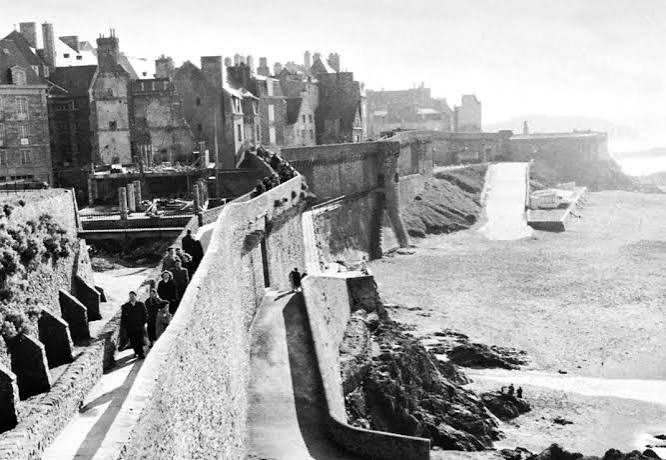
The attack on Festung Saint-Malo in August 1944 was part of the Allied advance through Brittany following the breakout from Normandy. Opinions within the U.S. Army leadership were divided. Initially, the plan was to bypass Saint-Malo, as its port had lost strategic importance due to the rapid Allied advance, supplies were now being delivered directly via the Normandy beaches.
However, the decision was made to attack Saint-Malo. The battle evolved into one of the fiercest sieges on French soil after D-Day. The city was defended by between 10.000 and 12.000 German troops under the command of Andreas von Aulock. Festung Saint-Malo consisted of the walled old town, the Aleth Peninsula, and the islands of Fort National and Île de Cézembre.
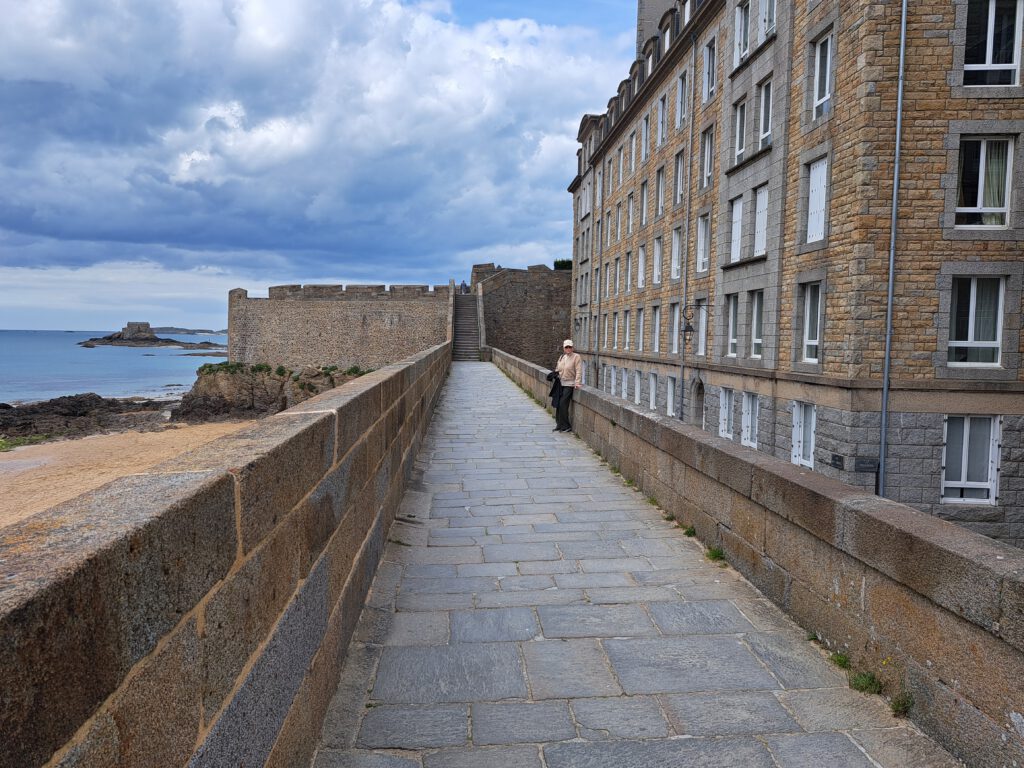
The assault was carried out by the U.S. VIII Corps, primarily the 83rd Infantry Division under General Robert Macon. Starting on August 6, heavy artillery bombardments, airstrikes, and attacks on individual German strongholds began. The result was the near-total destruction (80%) of the historic city center. The fighting eventually focused on the citadel and on August 17, 1944, von Aulock surrendered. Several thousand German soldiers were taken prisoner. Von Aulock had kept his promise: Saint-Malo would be defended to the last stone. The reality was almost as dire, the city lay in ruins by the end of the battle.
Île de Cézembre
Although Saint-Malo had fallen, the battle was not yet over. On Île de Cézembre, a garrison of several hundred German soldiers continued to resist. The Allies employed heavy artillery, naval gunfire, and intense airstrikes, including the first use of napalm bombs in Europe, to force the island’s surrender. On September 2, 1944, the German garrison finally capitulated.
The capture of Saint-Malo and Île de Cézembre ultimately held more political and symbolic value than military significance. The Germans lost hundreds of troops, and approximately 10.000 were taken as prisoners of war. The Americans suffered several hundred casualties. Civilian casualties numbered in the tens to hundreds.
Reconstruction of the Historic City Center
After the war, the historic city center of Saint-Malo was meticulously rebuilt in its original style under the direction of architect Louis Arretche, though with modern improvements. The reconstruction was completed by 1960 and remains one of France’s most successful historical restorations.
Channel Islands
The Channel Islands, including Guernsey and Jersey, were the only British territory ever occupied by the Germans. They were transformed into impregnable island fortresses. During the Normandy landings, the Allies bypassed these islands, rendering them irrelevant to the defense of the landing zones.
The Atlantic Wall can be considered an industrially produced defensive line, with hundreds of Regelbauten types applied from Norway to Spain. The Germans took standardization further than the French.
West Wall
The West Wall was a precursor to the Atlantic Wall in terms of standardization. It utilized various Bauprogramme (construction programs):
- Grenzwacht-Programm
- Limes-Programm
- Aachen-Saar-Programm
- Geldern- und Kriegregelbau-Programm
These programs included standardized bunker types built in large quantities. The “dragon’s teeth” were also constructed according to fixed standards.
Ostwall
The Ostwall also employed standardized designs, though not to the same extent as the Atlantic or West Walls. It consisted of standardized infantry bunkers, observation posts, artillery works, and underground connections, with many adaptations to local conditions.
Maginot Line
The French also used standardized designs for the Maginot Line, though less rigidly than the Germans. Categories included:
- Small infantry casemates
- Standard observation posts
- Standard gun turrets
- Large forts
Technical components were highly standardized:
- Armored turrets
- Gun emplacements
- Ventilation systems
- Generators
- Armored doors
However, the large forts were often adapted to local conditions.
Conclusion: The Legacy of the Defensive Lines
What did these enormous and costly constructions ultimately achieve for Germany and France?
- The Normandy section of the Atlantic Wall was breached by the Allies on June 6, 1944, the first day of the invasion and played no significant role after a few days.
- The West Wall was considered obsolete by the Germans after the fall of France, as the front had moved eastward. From 1940 onward, many components were dismantled and reused for the Atlantic Wall. The remaining bunkers, casemates, dragon’s teeth, and anti-tank ditches were often empty or only partially equipped. After the Normandy landings, the West Wall regained importance, and the bunkers were hastily repaired with limited success. By 1944, the neglected West Wall was seen as a means to slow down the Allied advance. It played a significant role in the Battle of Hürtgen Forest, proving to be a tough obstacle for the Allies.
- As previously mentioned, the Maginot Line was simply bypassed by the Germans, who advanced through Belgium. The line was fully manned by the French but played no role in stopping the German advance at the start of the war.
Sources:
- Hitler’s Atlantic Wall – George Forty, Leo Marriott, and Simon Forty
- Various Wikipedia articles