
Updated 26/10/2026
In addition to advancing armies and the battles associated with them, air battles and naval engagements, deceiving the enemy was an important part of warfare. The aim was to make the enemy believe something other than the reality, with the result that they misinterpreted the scale and direction of an attack. A distinction was made between deception at the strategic level (Operations Fortitude and Mincemeat, see the second page) and tactical deception on the battlefield (camouflage, dummy tanks, smoke screens, false radio transmissions, sound deception, etc.).
Deception Operations
Below is an overview of important Allied and German deception operations.
The Allies
The deception operations listed below relate to the battle in North-Africa and the invasions of Sicily and Normandy.
North-Africa and Sicily
- 1942 – North-Africa, El Alamein: Operation Bertram.
- 1943 – Operation Barclay: deception intended to make the Germans believe that the invasion would take place in Greece, the Balkans or the French Riviera, rather than Sicily.
- 1943 – Operation Mincemeat: part of Operation Barclay, a deception operation intended to make the Germans believe that the invasion would take place in Greece, the Balkans or the French Riviera, rather than Sicily.
Normandy
- 1943 – Operation Bodyguard: deception intended to make the Germans believe that the landings would take place at Calais rather than Normandy, including:
- 1944 – Operation Copperhead. Montgomery was temporarily impersonated by actor Clifton James to mislead German intelligence about Montgomery’s whereabouts, with the aim of concealing the location and timing of the Normandy landings.
- 1944 – Operations Fortitude and Quicksilver, intended to convince Germany that the main invasion would take place at Calais, led by George Patton and his First U.S. Army Group (FUSAG).
- 1944 – Operation Titanic, involving the deployment of dummy paratroopers and small groups of actual paratroopers to mislead the Germans about the imminent airborne landings in Normandy.
- 1944 – Operations Taxable and Glimmer, intended to simulate a fleet of ships and airborne landings near Cap d’Antifer and Boulogne during D-Day.
Germany
- 1944 – Operation Greif: German commandos wore American and British uniforms to create confusion during the Ardennes Offensive.
- 1944 – Operation Währung: German deception and infiltration activities associated with the Ardennes Offensive, aimed at disrupting Allied logistics. Here too, the Germans wore American uniforms.
The Most Important Operations
Operation Bertram – 1942
Operation Bertram was a highly successful deception operation carried out in Egypt under the command of Bernard Montgomery. Its main objective was to make the German Afrika Korps, commanded by Erwin Rommel, believe that the main attack would come from the south and that the attack was still some time away. Dudley Clarke played an important role in development of the plan.
Tanks disguised as lorries were used in the north, while lorries disguised as tanks were used in the south. The British transmitted fake radio traffic to confirm the existence and locations of units in the south (Operation Canwell). A dummy water pipeline was also constructed towards the south. This was built at a deliberately slow pace to convince the Germans that an attack was not imminent.
When the British launched their attack in the north on 23 October 1942 with a massive artillery bombardment, the Germans were completely taken by surprise. German General Georg Stumme believed for a considerable time that the attack was merely a diversionary maneuver.
Operation Barclay – 1943
The objective of this operation was to convince the Germans that the Allies intended to invade the Balkans, Greece or the French Riviera, rather than their actual target: Sicily.
Operation Mincemeat – 1943, Part of Operation Barclay
Operation Mincemeat was a plan devised by Rear Admiral John Godfrey and Lieutenant Commander Ian Fleming. With the approval of Churchill and Eisenhower, two members of British intelligence were given access to the body of Glyndwr Michael, a homeless man who had died after ingesting rat poison.
They dressed him as an officer of the Royal Marines and supplied him with various personal belongings in the name of the fictitious Captain William Martin. The most important items were letters exchanged between two British generals, suggesting that Greece and Sardinia would be used for the invasion and that the invasion of Sicily was merely a diversion.
The British transported the body by submarine to southern Spain and arranged for it to wash ashore, together with documents suggesting that the Allies intended to attack the Germans in Greece. A Spanish fisherman discovered the body the following morning, and with the assistance of the Spanish government, the personal effects were passed on to the Abwehr, the German military intelligence service.
The Germans took the information seriously and moved troops to Greece. The actual invasion took place in Sicily.
1943 – Operation Bodyguard: Deception Intended to Make the Germans Believe the Landings would take place at Calais rather Than Normandy
Operation Fortitude – 1944, Part of Operation Bodyguard
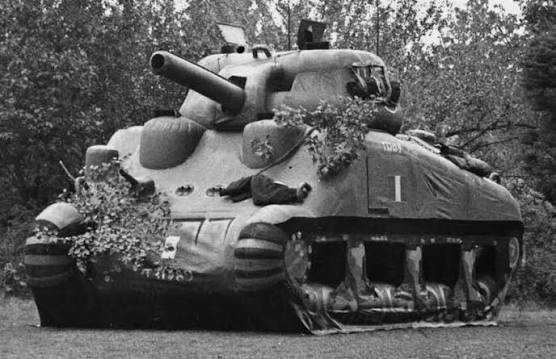
The original plan was developed by Noel Wild, head of Ops B, and John Bevan of the London Controlling Section towards the end of 1943. David Strangeways, head of the deception unit R-Force, was unimpressed with the plan and rewrote it completely.
The Fortitude plan involved creating dummy field armies in Edinburgh (Fortitude North) to convince the Oberkommando der Wehrmacht that an invasion of Norway was imminent, and in southern England (Fortitude South) to suggest that an invasion of Calais in France was being planned.
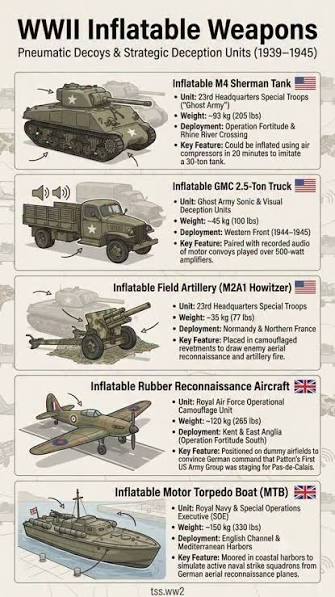
The Allies created an entirely fictitious army group in south-eastern England around George Patton: the First U.S. Army Group. German reconnaissance aircraft observed dummy tanks, dummy aircraft and dummy landing craft, while radio traffic reinforced the impression that a massive attack would be launched from Calais. Even after D-Day, Hitler remained convinced that the Normandy landings were merely diversionary attacks.
Operation Copperhead – 1944, Part of Operation Bodyguard
The operation was intended to mislead German intelligence about Bernard Montgomery’s whereabouts in order to conceal the exact location and timing of the landings. The result of this misleading was questionable and not very clear.
Operation Titanic – Part of Operation Bodyguard
The objective was to make the Germans believe that an invasion would take place near Calais on D-Day.
Operation Titanic (I, II, III and IV) was carried out by four squadrons of No. 3 Group RAF, including special duties squadrons, together with the 2nd SAS Regiment. The operations were conducted in conjunction with Operations Glimmer and Taxable.
Hundreds of dummy paratroopers, known as “Ruperts”, were used. Some of the dummies were fitted with explosives or other sound effects to convince the Germans that actual paratroopers were landing.
One hundred dummies were dropped north of the Seine, near Yvetot, Yerville and Doudeville in the Seine-Maritime region, and Fauville in the Eure region, together with two SAS teams. A further 50 dummies were dropped in Calvados, near Maltot and in the woods around Baron-sur-Odon. Two hundred dummies were dropped near Marigny in the Manche region. Another two SAS teams were dropped near Saint-Lô.
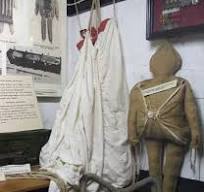
The actual paratroopers were tasked with using sound equipment they had brought with them to produce a wide variety of noises, creating the impression that a large-scale attack was taking place.
At the same time, aircraft dropped strips of aluminum foil over the Channel at specific times and in carefully arranged patterns, making it appear as though a large fleet of ships was heading towards Calais. The aim was to deceive German radar.
Operation Greif – 1944
Operation Greif was the initiative of Adolf Hitler. The objective was to create chaos behind enemy lines during the Ardennes Offensive with special trained German soldiers in American uniforms and, were possible, to capture one or more bridges over the Meuse before the Americans could blow them up. Otto Skorzeny was in command. The operation had a far more limited effect than the Germans had hoped.
Operation Währung – 1944
Here, too, German soldiers wore American uniforms, this time with the aim of disrupting Allied progres during the Ardennes Offensive. The objective was to delay the Allies and collect information about vital infrastructure, like for example bridges, and report the information to the German headquarters.
In addition to these various operations, double agents also played an important role.
The Double Cross System – The Double Agents
Important Double Agents
- Juan Pujol García (Garbo)
- Dusko Popov (Tricycle)
- Roman Czerniawski (Brutus)
- Wulf Schmidt (Tate)
- Eddie Chapman (Zigzag)
Juan Pujol García

As already mentioned in my article about D-Day, Juan was a double agent and a master of deception. Initially, he worked for the Germans under the codename Arabel. He later decided to side with the Allies and consequently became a double agent under the name Garbo.
His communications with the Germans were conducted via Madrid, by radio and letter. The radio messages were drafted by the British, and he then gave them a convincing Spanish touch.
He played an important role in deceiving the Germans by suggesting that the real, large-scale invasion would take place at Calais. This was closely connected with Operation Fortitude South. A fictitious military force, the First U.S. Army Group, commanded by George Patton and consisting of numerous inflatable tanks, vehicles and ships, was used for this purpose.
Even after D-Day, Garbo continued to maintain this story. The Wehrmacht did indeed keep two panzer divisions and nineteen infantry divisions in northern France because the Germans believed that the landings in Normandy on 6 June 1944 were a diversion.
Pujol had initially wanted to spy for the British, but British intelligence rejected him. He therefore decided to offer his services to the Germans. He proposed travelling to Great Britain to spy there. However, Pujol never went to Great Britain. Instead, he remained in Lisbon and created a fictitious network of 27 individuals, each with their own background and role.
Eventually, the British agreed to work with him, and he was given the codename Garbo. One fascinating detail is that Pujol was awarded the Iron Cross by the Germans while he was working for the British.
George Patton
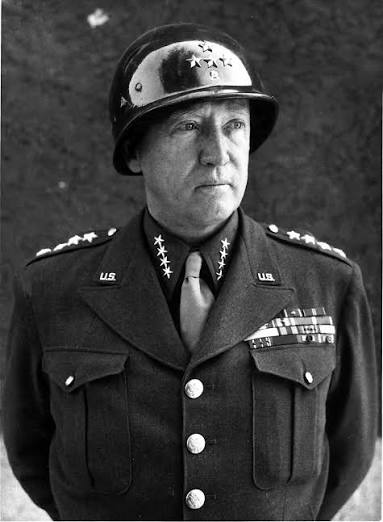
George Patton had built up an enormous reputation. The German military leadership, including Hitler, had deep respect for Patton and regarded him as the Allies’ best and most dangerous general.
The Allies knew that the Germans assumed a genuine, large-scale invasion would have to be led by Patton. His presence in south-eastern England, directly opposite Calais, was therefore the perfect bait.
Why was Patton stationed there? In the summer of 1943, Patton had slapped two American soldiers suffering from what was then called shell shock and verbally abused them, calling them cowards. This resulted in a major scandal in the American media, and Eisenhower decided to relieve Patton temporarily of his active command.
Patton was therefore left without an operational command in England and was the perfect candidate to play the role of a fictitious army commander.
The phantom army consisted of thousands of inflatable tanks and other vehicles, wooden aircraft and imitation landing craft. A massive stream of false messages created the impression that a million-man army was receiving orders. Garbo helped by leaking all kinds of false information to the Germans.
The Englandspiel
In England, the Allies had therefore built an enormous deception network to mislead the Germans before D-Day. In occupied Netherlands, almost the opposite happened. The Germans succeeded in deceiving the British secret service for years by using captured agents.
From 1942 onwards, Dutch secret agents were parachuted into the Netherlands from England to establish links with the resistance and organize sabotage and intelligence activities. Many of these agents, however, were arrested by the Germans shortly after landing.
The Germans subsequently forced some of them to continue their radio communications with London. They pretended to London that they were still free and that their assignments were being carried out successfully. The German operation was given the codename Operation Nordpol; in the Netherlands, it became known as the Englandspiel.
Huub Lauwers
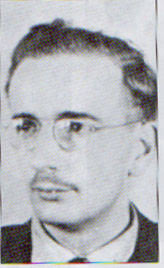
One of these agents was Huub Lauwers.
Huub Lauwers worked as a spy in the Netherlands. He travelled to England to offer his services. There, he was recruited by British intelligence as a radio operator.
The German Abwehr, the intelligence service, captured British secret agents and attempted to extract secret information from them. Under the leadership of Admiral Hermann Giskes, this information was used to deceive the British.
On 6 November 1941, Lauwers was parachuted into the Netherlands with orders to support the resistance and establish secure communications with the Allies. In March 1942, he was arrested and forced to provide false information to the British.
Giskes knew that agents incorporated a security check into their radio messages. Lauwers eventually disclosed his code to the Germans, but it was not the code he was supposed to use. If the genuine code was included in the information, the British would know that the message could be trusted.
Lauwers sent a message to the British and left out the code, signaling that he had been captured and that the information was therefore false. The British, however, overlooked his warning and informed Lauwers of their plans to send more agents.
This information consequently reached Giskes, and the new agents were arrested as soon as they arrived. A total of 59 agents were captured, many of whom were killed.
Garbo made the Germans believe that the invasion would take place at Calais, while the Germans made London believe that their agents in the Netherlands were still free.
There was one important difference: Garbo was a deliberate double agent who helped the British; the Dutch agents involved in the Englandspiel were not voluntary German double agents. They were prisoners who were forced by the Germans to continue transmitting information by radio.
The question is how the British could have continued sending agents for so long when there were already sufficient reasons to doubt whether everything was as it seemed. Did the British deliberately act in this way? However, no convincing evidence has ever been found to prove that this was the case.
Dusko Popov
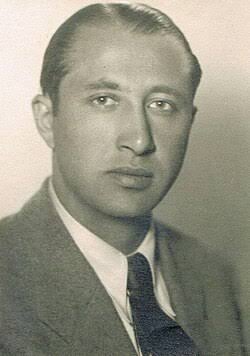
His codename was Tricycle for the British and Ivan for the Germans.
Popov was a different type of agent from Pujol. He combined espionage, travel and women, and was later associated with the image of James Bond created by the writer Ian Fleming. Whether this connection was genuine remains unclear.
Popov was a Yugoslav who had been recruited by the Abwehr while already working for the British. In 1941, the Germans sent him to America to gather information, including intelligence about Pearl Harbor.
Popov attempted to warn J. Edgar Hoover about the impending Japanese attack on Pearl Harbor, but Hoover did not take the warning seriously.
Popov also played an important role in the deception surrounding D-Day and Operation Fortitude-South. He, too, led the Germans to believe that the attack would take place at Calais rather than Normandy.
Roman Czerniawski
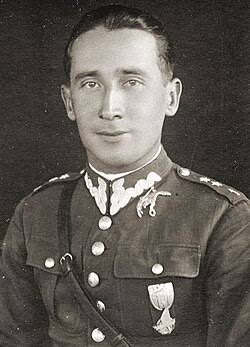
His codename was Brutus.
Czerniawski was a Polish officer who played an important role in the Polish-French intelligence network Interalliée, the largest espionage network in occupied France.
In November 1941, he was betrayed by a fellow member of Interalliée. The Germans arrested him and recruited him as a German agent under the codename Hubert, subsequently sending him to England.
He was later arrested by the British and became a double agent. Initially, he worked with a British radio operator under the pseudonym Chopin. He supplied information that became part of the Allied deception campaign, Operation Fortitude South, under the name Brutus.
His reports were read by Adolf Hitler, and the Abwehr even believed that he was a liaison officer working for Eisenhower.
Brutus was the principal source of disinformation intended to draw German attention towards the Pas de Calais. He continued working for the British until the end of the war.
Thanks to his reports, V-2 rockets were directed towards less densely populated areas of London, saving many lives. The British therefore regard him as one of the unsung heroes of the Second World War.
Wulf Schmidt
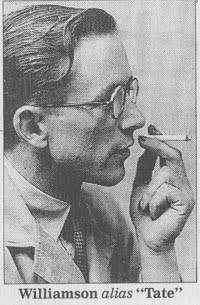
His codename was Tate.
Schmidt, later known as Harry Williamson, was a Danish citizen who parachuted into Willingham, Cambridgeshire, on 19 September 1940.
However, another captured agent had betrayed his arrival, and Schmidt was arrested immediately. After being taken into British custody, he was recruited as a double agent.
As an active agent, Schmidt needed money. In the spring of 1941, the Germans sent Karel Richter to deliver funds to him, but Richter was also captured soon afterwards.
Eventually, the Germans used a Japanese diplomat to deliver the money to Schmidt, thereby revealing the extent of German-Japanese cooperation.
Schmidt ultimately received £20,000 (approximately £870,000 in 2025 money). He now established himself in London as a wealthy man.
He told the Germans that he was working on a friend’s farm and could only travel to London at weekends, meaning that he could not provide intelligence every day.
Schmidt also took part in Operation Bodyguard, the deception campaign designed to conceal the Normandy invasion. His performance was highly valued by the Germans, and he was naturalized as a German citizen so that he could receive the Iron Cross, First and Second Class.
Schmidt’s Final Deception
German submarines could not use conventional navigation methods while submerged. Off the coast of southern Ireland, they determined their position using a known reference point: a conical underwater mountain.
Rodger Winn, head of the U-Boat Tracking Room, proposed laying a minefield at that location. Since no minelayer was available, it was suggested that the Germans should instead be informed, through a controlled agent, that a minefield had been laid at the designated position.
Schmidt passed the message to the Germans, but nothing appeared to happen, until a U-boat happened to sink off the Irish coast.
Schmidt informed the Germans that he was furious and ready to resign. After all, he had risked his life to obtain the information, yet the Germans had done nothing with it.
Two days later, the Kriegsmarine ordered that an area of 160 square kilometers around the underwater mountain was to be avoided. As a result, the reference point could no longer be used for navigation, while the exclusion zone also created a safe area for Allied shipping.
Eddie Chapman
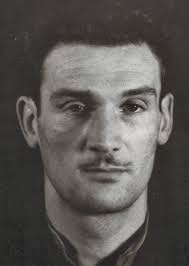
His codename was Zigzag.
Chapman was an unusual case. Before the war, he had been a professional criminal specializing in safecracking.
During the war, he fell into German hands and was recruited as an agent by the Abwehr. His German codename was Fritz and later, once he had become better known, Fritzchen.
After returning to England, however, he became a double agent for the British. His codename suited him perfectly. His loyalties seemed constantly to shift in different directions.
On 16 December 1942, Chapman arrived back in England from Germany with orders to sabotage the de Havilland aircraft factory, where Mosquito aircraft were being built.
On the night of 29 January 1943, Chapman, working in cooperation with the British, staged a simulated sabotage attack on the de Havilland factories at Hatfield. The Germans photographed the damage and were convinced that the sabotage had succeeded. British intelligence also published an article in the Daily Express to reinforce the story.
Portugal
The British wanted to obtain additional information about German activities. Chapman eventually returned to Germany via Lisbon.
With the knowledge of the British, he departed from Liverpool aboard the ship City of Lancaster, travelling under the name Hugh Anson as a member of the crew.
After arriving in Lisbon, he contacted the German embassy and offered to blow up the ship. The British wanted to obtain examples of German explosives and considered this a good way to acquire a few bombs.
Chapman, alias Anson, received two bombs from the Germans and handed them over to the ship’s captain. The Germans failed to realize that the ship returned to England undamaged.
Chapman was subsequently sent by the Germans to occupied Norway to teach at a German espionage school.
During his introduction, Chapman received the Iron Cross (or possibly a War Merit Cross) for his sabotage work against the de Havilland factories and the City of Lancaster.
While staying in Oslo, he secretly photographed German agents who were staying with him.
Back to London
After his time in Norway, Chapman was sent back to London. He parachuted into Cambridgeshire on 29 June 1944 and subsequently travelled to London, where he was tasked with reporting on the accuracy of the V-1 flying bombs.
He consistently told the Germans that the flying bombs were hitting their intended targets in central London with great accuracy, whereas in reality this was often not the case.
As a result, the Germans never corrected their targeting, meaning that the flying bombs caused considerably less damage. His actions were similar to those of Czerniawski, although in that case the deception concerned the V-2.
Chapman associated with criminal figures in London and was not particularly discreet about his activities. He consequently became a security risk for British intelligence and was dismissed on 2 November 1944.
The Double Cross System
Pujol, Popov, Czerniawski, Schmidt and Chapman were among the many agents who formed part of the Double Cross System.
The double agents were able to provide precisely the kind of information the Germans expected to receive. If an agent supplied nothing but false information, the Germans would eventually become suspicious.
For that reason, genuine information was sometimes used as well, but it was often deliberately passed on so late that the Germans could no longer act on it.
This nevertheless helped the German intelligence service develop confidence in the source, allowing the agent to be used for genuinely important deception operations.
Conclusion
“The Allies did not have to tell Hitler what to believe. They made sure he believed it himself.”
Source:
Wikipedia
Het Englandspiel – Becker & Becker