
When the United States awoke after the attack on Pearl Harbor and the British, following the Battle of Britain, saw opportunities to expand their air fleet, enormous numbers of bombers and fighter aircraft were produced.
While the numbers often vary across different sources (and some were built even after the war), below is an overview of the most significant aircraft produced by the Allies:
United States – Bombers
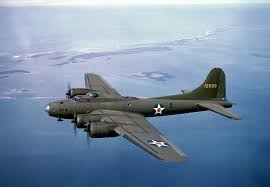
Boeing B-17 Flying Fortress: Four-engine heavy American bomber, with approximately 12,000–13,000 units produced
Consolidated B-24 Liberator: The most-produced four-engine heavy American bomber, with around 18,000–19,000 units built
Lockheed Hudson: Light American/British bomber, widely used by the RAF; 2,900 units built
Douglas A-20 Havoc/Boston: Light American bomber, used by the RAF and USAAF; 7,500 units produced
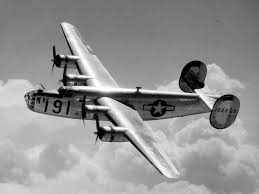
Martin B-26 Marauder: Light American bomber; approximately 5,200 units built
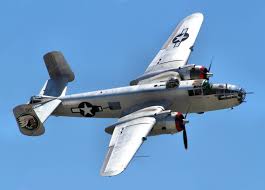
North American B-25 Mitchell: Light American bomber, famous for the Doolittle Raid after the attack on Hawaii; around 9,800 units built
The Willow Run Factory
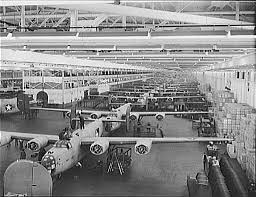
A Ford Motor Company plant near Detroit, the Willow Run factory, agreed to produce B-24 Liberator bombers instead of cars, operating under the motto: “If you can mass-produce cars, why not an airplane?” The numbers tell an almost unbelievable story. Once production was in full swing, Willow Run produced a complete B-24 Liberator every 63 minutes. Over three years, this factory manufactured nearly 8,700 bombers, half of the total number of B-24s built.
Who built these planes? At its peak, Willow Run employed 40,000 workers, a third of whom were women—many of whom had never held a tool before the attack on Pearl Harbor. Driven by patriotism and the financial independence their paychecks provided, they came from all over. When the war ended in 1945, most of these women returned to their families and households.
One bomber every 63 minutes—and many of the workers, including thousands of women who had been told they couldn’t do it, proved what was possible when given the chance.
United Kingdom – Bombers
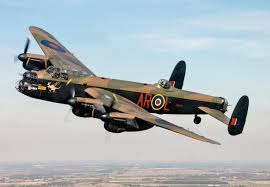
Avro Lancaster: Four-engine heavy British bomber; approximately 7,000–7,500 units produced
Handley Page Halifax: Four-engine heavy British bomber; around 6,000–6,500 units produced
Short Stirling: Four-engine heavy British bomber, predecessor to the Lancaster and Halifax; approximately 2,400 units built
Vickers Wellington: Primarily used as a twin-engine night bomber, the most-produced British aircraft; around 11,460 units built
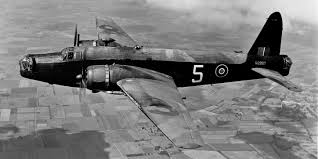
De Havilland Mosquito: Twin-engine aircraft used as a light bomber, fighter, and reconnaissance plane; approximately 7,500–8,000 units produced
Bristol Beaufighter: Light bomber/torpedo fighter; around 5,900 units built
United States – Fighters
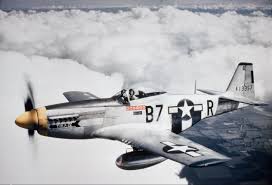
North American P-51 Mustang: Long-range American fighter, known for escorting bombers over enemy territory; 15,000 units produced
Republic P-47 Thunderbolt: Heavily armed American fighter, also used as a fighter-bomber; 16,000 units built
Curtiss P-40 Warhawk: American fighter, deployed in the Pacific, Africa, and China; approximately 13,500–14,000 units produced
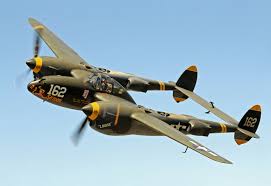
Lockheed P-38 Lightning: Twin-engine American fighter, suited for long-range missions (Pacific); 10,000 units produced
Vought F4U Corsair: American fighter designed for the US Navy, capable of carrier operations; around 12,580 units built (through 1953)
United Kingdom – Fighters
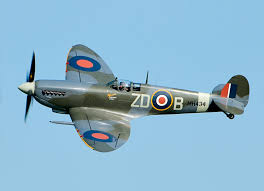
Supermarine Spitfire: Iconic British fighter; 20,300 units produced
Hawker Hurricane: British fighter; 14,500 units built
Hawker Tempest: Long-range fighter, designed for ground attacks and intercepting V-1 flying bombs; around 1,700 units built
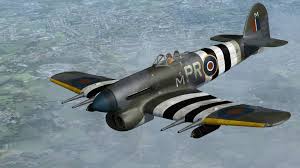
Hawker Typhoon: Long-range fighter and bomber; approximately 3,320 units built
Hawker Sea Fury: Carrier-based fighter for the Royal Navy; around 860 units built
Other Notable Aircraft
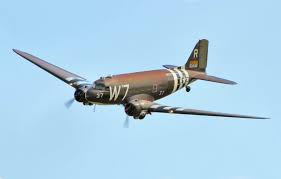
Douglas DC-3/C-47: Passenger and troop transport aircraft; around 16,000 units built. According to Eisenhower, it was the “workhorse of the air force” and one of the most important weapons that helped the Allies win the war
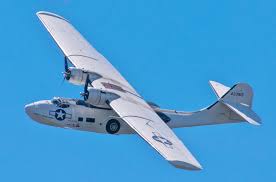
Consolidated PBY-1/5 Catalina: Flying boat, widely used for reconnaissance and patrol bombing; around 3,300 units built
Boeing B-29 Superfortress: Known for the atomic bombs dropped on Hiroshima and Nagasaki; 3,970 units built
Fairey Battle: Twin-engine light British bomber, obsolete but still used early in the war; around 7,500 units built
Boulton Paul Defiant: Fighter, obsolete “turret fighter” used until 1943; 1,064 units built
Losses
The number of aircraft lost during bombing raids due to anti-aircraft fire or air combat was enormous. Some examples:
Boeing B-17 Flying Fortress: Approximately 4,750 units lost
Consolidated B-24 Liberator: 3,500 units lost
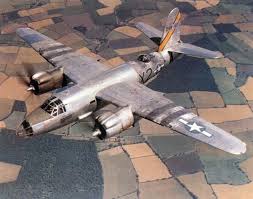
Martin B-26 Marauder: Of the 5,200 units built, only a handful survived the war. Early training in the US resulted in many losses, earning it the nickname “widow maker” or “flying coffin.” Improvements later reduced losses significantly
North American B-25 Mitchell: Losses unknown, but it was one of the most successful Allied aircraft. All 16 B-25s from the Doolittle Raid on Tokyo were lost. Over 100 survive worldwide, with 45 still airworthy
Avro Lancaster: Approximately 3,300 units lost
Handley Page Halifax: Around 1,800 units lost
Short Stirling: About 800 units lost
Vickers Wellington: Losses around 2,290 units
North American P-51 Mustang: 2,500 units lost
Republic P-47 Thunderbolt: 3,500 units lost
WASP – Women’s Army Service Pilots
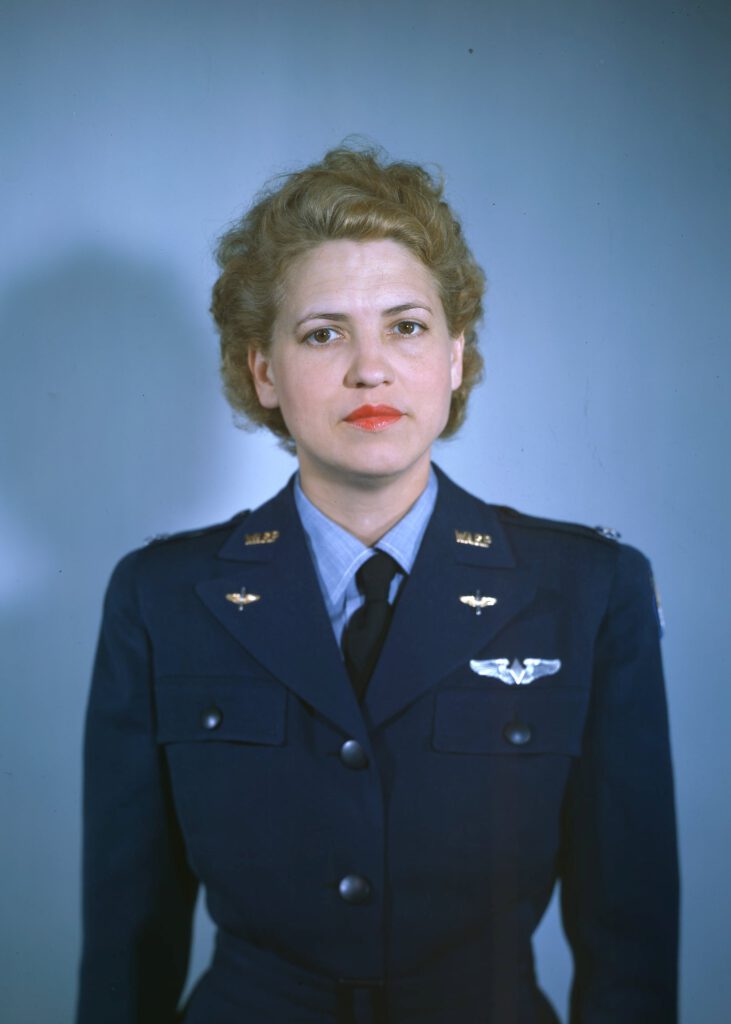
During the war, significant losses were suffered, both in aircraft and personnel. Lost aircraft needed to be replaced by new production, and these planes had to be tested and delivered to various locations, both nearby and far away. But who would do this? There was already a severe shortage of aircrew. In 1939, pilot Jacqueline “Jackie” Cochran wrote a letter to First Lady Eleanor Roosevelt suggesting the use of female pilots to test and deliver aircraft. General Robert Olds asked her to ferry a bomber to the United Kingdom as a test. Jackie successfully delivered the aircraft to England, volunteered with the Air Transport Auxiliary (ATA), and recruited 25 American female pilots to help ferry aircraft to various locations in Europe. These women were the first American women to fly military aircraft.
In the summer of 1941, Jackie and test pilot Nancy Harkness Love submitted requests to the U.S. Army Air Forces to allow women to fly non-combat missions, aiming to free up male pilots for combat duties. The plan was to use qualified female pilots to ferry aircraft from factories to military bases.
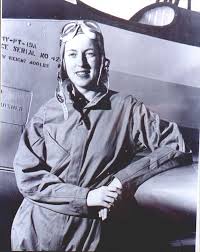
When Robert Love, Nancy’s husband, informed Colonel William Turner that his wife was a pilot, Turner became interested and asked if she knew other female pilots. Turner and Nancy Love met and started a program to have female pilots deliver aircraft from factories. The plan was not immediately accepted, and civilian pilots were initially used. Eventually, the proposal reached General Henry Arnold. Eleanor Roosevelt again supported the idea of using female pilots. Arnold endorsed the plan and issued an order to hire female pilots within 24 hours. Nancy was appointed leader of the newly formed group, and the Women’s Auxiliary Ferrying Squadron (WAFS) was established, becoming operational on September 10, 1942. Love started with 28 female pilots, but the group expanded to several squadrons during the war. Since the pilots had to pay for their own uniforms, only a few wore them. They were, however, issued standard khaki flight overalls, a parachute, goggles, a scarf, and a leather flight jacket.
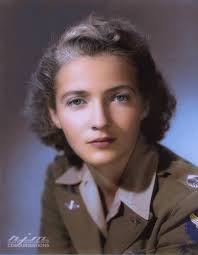
The WAFS had an average of 1,400 flight hours and commercial training. They worked on 90-day renewable contracts and earned $250 per month, but had to pay for their own lodging and meals.
When Cochran returned from England, she discovered the introduction of the WAFS. Love’s proposal had been accepted while Cochran’s own proposal had been shelved during General Arnold’s illness. Arnold took action, and Cochran was appointed leader of the Women’s Flying Training Detachment (WFTD), tasked with training as many women as possible to become pilots.
In the early stages of training, several serious accidents occurred. Margaret Oldenburg and her instructor were practicing spin recovery, but the maneuver failed, and both were killed. Cornelia Fort was flying in a group with male pilots when one pilot flew too close, damaging her wing with his landing gear. Her plane dove and crashed, killing her.
In July 1943, by order of Arnold, the WAFS and WFTD were merged into the Women’s Army Service Pilots (WASP), with Cochran as the leader. Love continued as head of the WASP transport organization.
Discrimination
25,000 women applied, but only 1,074 completed the training successfully. The majority of the female pilots were white. A few were of Spanish descent, and one was from the Oglala Sioux tribe. Several African American women reached the final interview stage but were all rejected. Cochran stated: “It was already difficult enough to overcome resistance to female pilots, and we didn’t want to get involved in a racial struggle as well.”
Mission
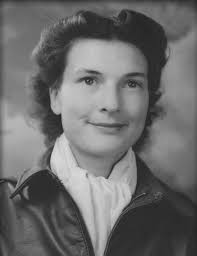
The WASP’s mission was to go to aircraft factories, test the planes, and deliver them. Between September 1942 and December 1944, the WASP delivered 12,652 aircraft of various types.
38 pilots lost their lives in accidents—11 during training and 27 during missions. Since these pilots were not officially part of the military, the families had to pay to have their bodies transported home. In early 1944, Arnold proposed integrating female pilots into the Army Air Forces, but the media opposed the idea, urging women to resign and return the tasks to men.
On December 20, 1944, the WASP was disbanded. Arnold stated:
“The WASP has completed its mission. Their tasks have been carried out with great success. But the cost has been high. 38 WASP have died in the line of duty, helping the country move toward total victory. The Air Force will forever remember their service and sacrifice.”
Recognition
Never receiving the recognition they had earned. Never getting the benefits their male counterparts received. Never hearing the country say “thank you”. The last WASP reunion was held in 2019. Only a handful of the original 1,102 woman were still alive. They gathered, these women in their 90s, to remember what they had done when America needed them – and how America forgot.
For years, efforts were made to grant the WASP veteran status. Even the Veterans of Foreign Wars (VFW) opposed it: “WASP should not receive military recognition, as it would undermine the special status of veterans and harm the benefits they enjoyed.”
Through the efforts of Jimmy Carter, the honorable discharge certificate was finally awarded to all former WASP members in 1979, followed by the World War II Victory Medal in 1984. Many of these medals were received by the children of the WASP pilots.
On July 1, 2009, President Obama awarded the WASP the United States Congressional Gold Medal. Obama (abridged): “The WASP answered the call to help with great courage. Every American should be grateful for their service in difficult times, and I am honored to finally give them the recognition they deserve.”
Sources
Wikipedia – WASP